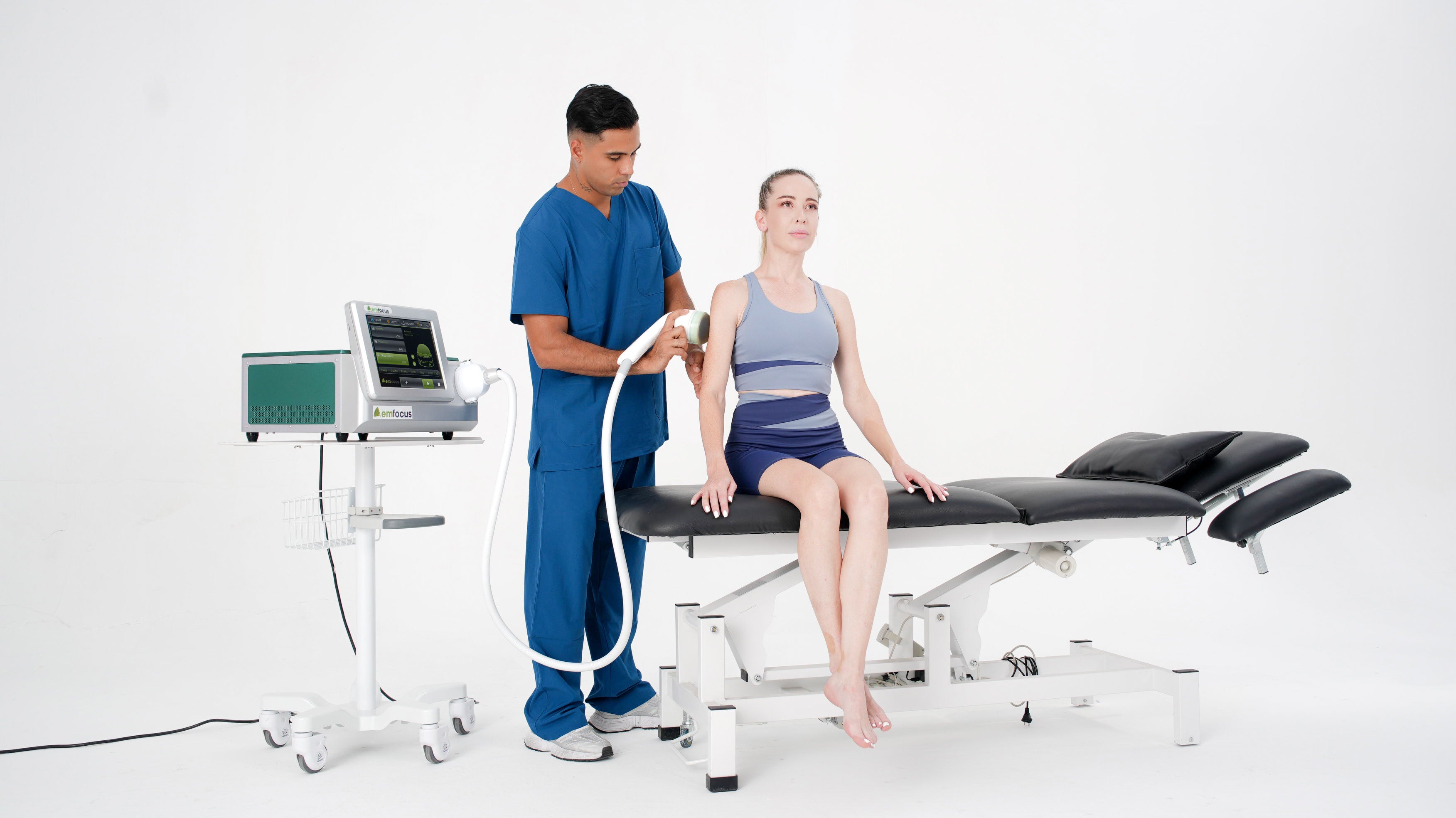



Plantar fascistic is one of the most common causes of heel pain.
People who stand all day, runners, or anyone who suddenly increases their training load may wake up one morning with a sharp, stabbing pain in the first step out of bed.
When rest, stretching, insoles, or ice have limited effect, many clinicians recommend shockwave therapy.
But what exactly is it? Why does it work so well for plantar fascistic? And what should patients and practitioners expect during treatment?
This guide explains everything in a clear, practical way—easy for patients to understand, and helpful for doctors who want clinical structure.
1. What Is Shockwave Therapy?
Shockwave therapy uses high-energy acoustic waves to stimulate the body’s natural repair process.
It is non-invasive, drug-free, and does not require anesthesia.
Originally used to break kidney stones, it is now widely applied in orthopedics, sports medicine, and physiotherapy for chronic soft-tissue injuries.
For plantar fascistic, shockwave therapy helps by:
-
Reducing pain
-
Increasing blood flow
-
Releasing tight fascia
-
Stimulating tissue regeneration
It doesn’t “mask” pain; it activates healing.
2. Why Shockwave Works So Well for Plantar Fasciitis
Plantar fasciitis is usually a chronic overload injury, not an acute “inflammation” as many people think.
The plantar fascia becomes irritated, thickened, tight, or partially damaged.
Shockwave therapy helps reverse those changes through four key mechanisms:
1. Stimulates Tissue Regeneration
Shockwaves activate fibroblasts and increase growth factors such as VEGF and eNOS.
This encourages the plantar fascia to repair itself and produce healthier collagen.
2. Improves Blood Circulation
The heel area normally has poor blood supply.
Shockwaves help open microvessels, improving oxygen and nutrient delivery.
3. Breaks Down Adhesions or Calcification
Chronic tension can cause tissue stiffness or small calcium deposits.
Shockwaves help soften these problematic areas.
4. Reduces Pain Through Neuromodulation
Shockwaves affect pain receptors and neural pathways, helping “reset” over-sensitized nerves.
This is why many patients say:
“After the third treatment, the first step in the morning became much easier.”
3. Radial vs. Focused Shockwave: Which Is Better for Plantar Fasciitis?
Both are effective—each with its strengths.
⭐ Radial Shockwave (RSWT)
-
Energy spreads superficially
-
Great for tight calf muscles + broad plantar fascia tension
-
Ideal for mild to moderate plantar fasciitis
⭐ Focused Shockwave (FSWT)
-
Penetrates deep
-
Targets the exact pain point
-
Excellent for chronic or severe plantar fasciitis and calcification
Clinically, the best results often come from combining both—for example:
-
Radial: relax calf & fascia
-
Focused: treat the core lesion
KaphaPhysio’s DR Radial series + EMFOCUS focused series match this dual-clinical approach.
4. What a Shockwave Treatment Session Looks Like
A typical session for plantar fasciitis includes:
1. Clinical Assessment
Your therapist will evaluate:
-
Exact pain point
-
Tightness in the calf muscles
-
Plantar fascia thickness
-
Gait or footwear issues
2. Treatment Procedure
Steps may include:
-
Apply conductive gel
-
Release calf and sole tension
-
Deliver focused treatment to the main pain area
Duration: 8–15 minutes depending on settings.
3. Does It Hurt?
Most people feel:
-
Mild soreness
-
Deep vibration
-
A sharp but tolerable sensation on the pain point
It should never be unbearable; therapists adjust intensity based on your comfort.
5. How Many Sessions Do You Need? When Does It Work?
Most guidelines recommend:
-
1 session per week
-
3–6 sessions per course
Symptom improvement timeline:
-
After 1 session: mild relief or no change
-
After 2–3 sessions: noticeable improvement in morning pain
-
After 4–6 sessions: tissue healing and longer-lasting results
For chronic cases (>6 months), more sessions may be required.
6. Can You Exercise After Shockwave Therapy?
Short answer: Yes, but avoid intense exercise for 24–48 hours.
Light walking and gentle stretching are okay;
running, jumping, or long-distance walking may slow recovery.
The tissue is in the “repair phase,” and heavy load too soon may interrupt healing.
7. Will Shockwave Therapy Cure Plantar Fasciitis?
Most patients experience significant improvement or complete recovery.
Long-term success depends on:
-
Calf flexibility
-
Footwear
-
Body weight
-
Activity load
-
Stretching habits
Shockwave addresses the biological cause.
Daily habits help maintain the outcome.
8. Who Should Avoid Shockwave Therapy?
Avoid or use caution if the patient has:
-
Pregnancy (relative contraindication)
-
Blood thinners / platelet disorders
-
Acute heel infection or open wound
-
Neural disorders
-
Heel fracture or acute tear
A therapist should always assess suitability before treatment.
9. Clinical Notes for Professionals
For clinicians, plantar fasciitis treatment should include:
✔ Shockwave applied to plantar fascia & medial calcaneal origin
✔ Soft-tissue release to gastrocnemius & soleus
✔ Assessment of ankle dorsiflexion
✔ Fascia ultrasound if available (look for thickness or hypoechoic areas)
✔ Footwear analysis & orthotic recommendation
✔ Calf stretch + plantar fascia stretch protocol
Shockwave is powerful—but best results come from biomechanical correction + shockwave。
10. Summary
Shockwave therapy is one of the most effective, evidence-based, and fastest recovery solutions for plantar fasciitis.
It activates the body’s natural healing, improves circulation, reduces pain, and restores mobility.
👉 For patients: it helps you walk pain-free again.
👉 For clinicians: it is a reliable, non-invasive tool backed by strong research.