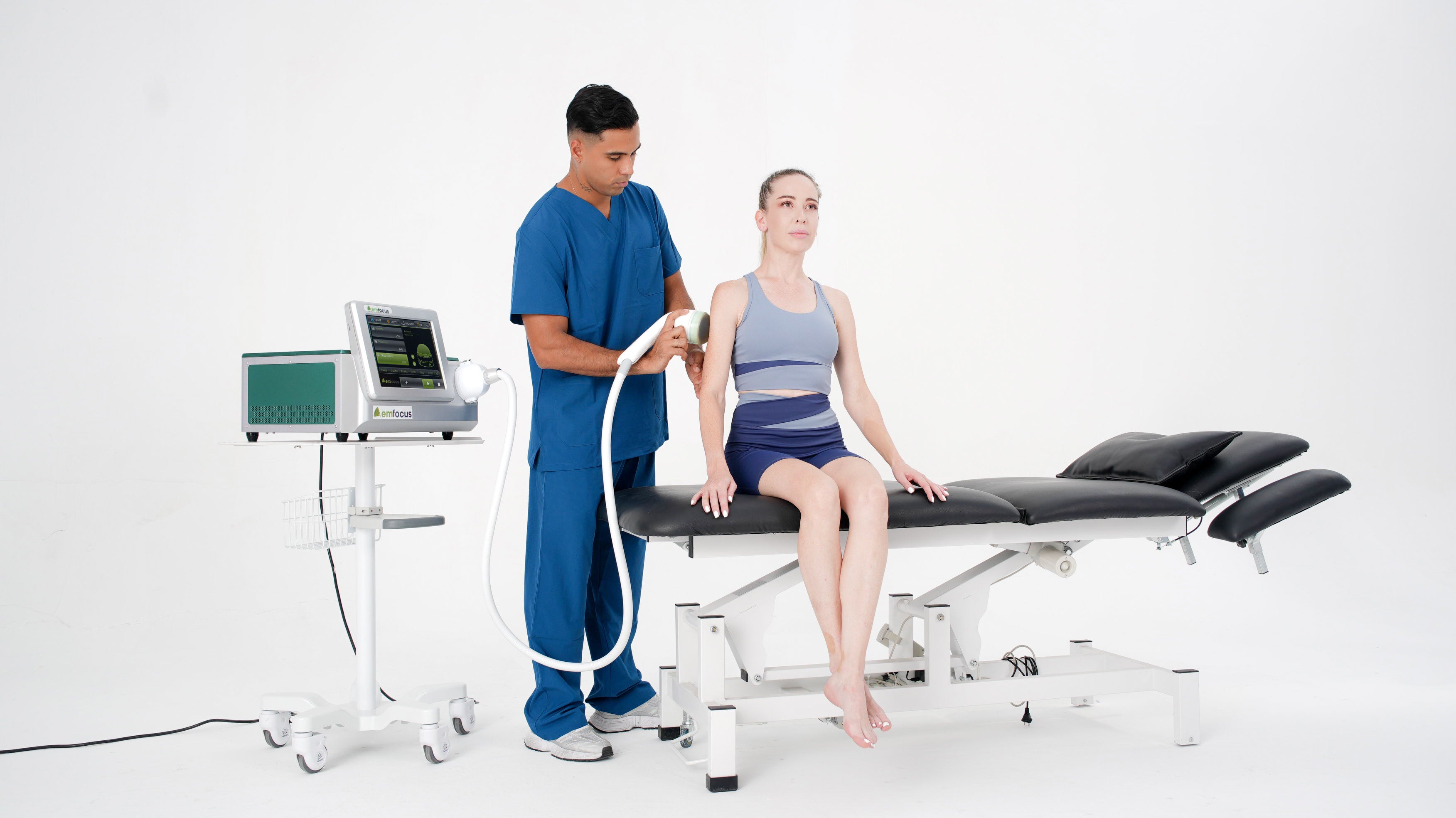



Shockwave therapy has become one of the most popular treatments for muscle and tendon injuries — especially among athletes and active individuals.
It helps relieve pain, stimulate healing, and speed up recovery.
But one common question remains: Can you exercise after shockwave therapy?
The short answer: Yes — but with caution.
Let’s take a closer look at what happens after treatment, how your body responds, and how to safely return to physical activity.
1. Understanding How Shockwave Therapy Works
Shockwave therapy uses high-energy acoustic waves to stimulate cellular activity and improve blood flow in injured tissues.
It helps trigger natural healing responses, breaking down calcified deposits, increasing collagen production, and promoting tissue regeneration.
There are two main types of shockwave therapy:
-
Radial Shockwave – spreads energy over a larger area, ideal for muscle tension, tendinitis, and general pain management.
-
Focused Shockwave (like KaphaPhysio’s EMFOCUS series) – delivers energy to a specific depth, perfect for treating chronic conditions such as plantar fasciitis, tennis elbow, or deep joint pain.
After treatment, your body begins a controlled inflammatory process, which is essential for healing.
This means the tissues need some recovery time before resuming intense activity.
2. What Happens to Your Body After Shockwave Therapy
It’s normal to feel mild soreness, warmth, or tenderness around the treated area for 24–48 hours.
This does not mean the treatment caused harm — it indicates that your body has started repairing itself.
During this time, your cells are regenerating, blood circulation is improving, and the tissue structure is being restored.
Engaging in high-intensity exercise too soon can interfere with this healing phase and reduce the overall effectiveness of therapy.
3. So, Can You Exercise After Shockwave Therapy?
✅ Yes, you can — but timing and intensity matter.
Here’s a simple rule:
-
Avoid strenuous exercise or heavy training for 24–48 hours after each session.
-
Gentle movement, such as walking or stretching, is not only safe but can help promote circulation and recovery.
Think of your treatment as a “reset button.”
You’re giving your body new energy to rebuild — but like any rebuilding process, it needs rest before stress.
4. Post-Treatment Activity Guidelines
| Time After Therapy | What You Can Do | What to Avoid |
|---|---|---|
| 0–24 Hours | Rest, gentle walking, hydration | Running, weightlifting, or vigorous training |
| 24–48 Hours | Light stretching, yoga, normal daily activity | High-impact sports or strength training |
| 48+ Hours | Gradually return to exercise as pain allows | Avoid movements that cause discomfort |
💡 Pro Tip:
Always follow your physiotherapist’s personalized guidance — they may adjust your exercise plan depending on your injury and recovery stage.
5. When Exercise Can Actually Help
Once the initial soreness fades, light exercise can actually enhance the benefits of shockwave therapy.
Movement increases blood flow, strengthens healing tissues, and helps maintain flexibility.
Safe options include:
-
Low-resistance cycling
-
Gentle swimming
-
Controlled stretching or balance exercises
-
Low-impact rehabilitation training
The key is moderation — exercising with your recovery, not against it.
6. When to Avoid Exercise After Treatment
Even though shockwave therapy is safe and non-invasive, pushing your limits too soon can delay healing.
You should pause or postpone exercise if you experience:
-
Significant pain or swelling after therapy
-
Persistent redness or inflammation
-
New or different pain in the treated area
These signs indicate your body still needs time to adapt to the treatment’s effects.
7. Long-Term Benefits: Combining Shockwave Therapy and Exercise
When used correctly, shockwave therapy and exercise complement each other beautifully.
Shockwave therapy reactivates healing in tissues that have stopped responding to normal recovery —
while exercise strengthens those same tissues, preventing the problem from coming back.
This is why many sports medicine clinics and physiotherapists use shockwave therapy as part of an active rehabilitation plan, rather than as a stand-alone treatment.
8. Choosing the Right Equipment for Professional Recovery

At KaphaPhysio, we design advanced physiotherapy equipment to make recovery faster, safer, and more effective.
Our Radial Shockwave systems are ideal for soft tissue injuries and muscle tension,
while our EMFOCUS Focused Shockwave series delivers deep, precise energy for chronic tendon and joint conditions.
Both systems feature:
-
Easy-to-use interfaces with preset treatment programs
-
Adjustable energy and frequency settings
-
Reliable performance for clinics and sports rehabilitation centers
Whether you’re a therapist helping patients recover or an athlete seeking advanced pain relief,
KaphaPhysio devices offer the perfect combination of technology and clinical reliability.
9. Conclusion — Balance Is Key
You can absolutely exercise after shockwave therapy — just give your body the rest it needs first.
Avoid high-intensity activity for at least a day or two, listen to your body, and follow your therapist’s advice.
With proper timing and guidance, shockwave therapy and exercise together can help you rebuild strength, restore mobility, and stay pain-free for the long term.