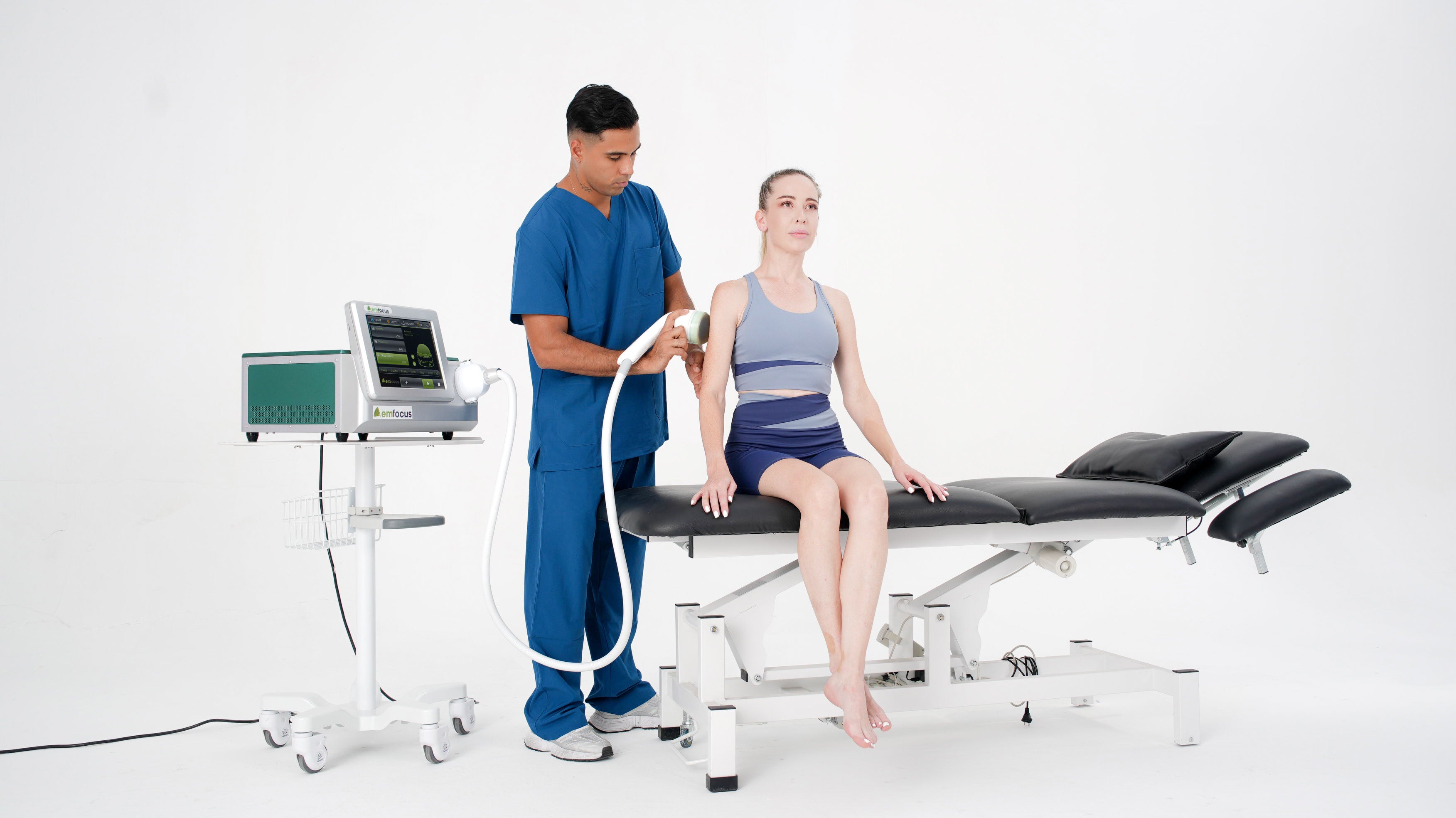



Radial shockwave therapy is a widely used physical therapy technique in rehabilitation, sports medicine, and pain management.
Thanks to its non-invasive nature, broad treatment coverage, and ease of use, radial shockwave therapy has become a standard solution for many soft-tissue conditions in daily clinical practice.
What Is Radial Shockwave Therapy?
Radial shockwave therapy uses high-frequency acoustic waves generated pneumatically or electromagnetically.
Unlike focused shockwave therapy, radial shockwaves spread outward from the applicator, mainly affecting superficial and mid-depth soft tissues.
The energy is delivered through the skin to muscles, fascia, and tendons, triggering biological responses that support pain relief and tissue recovery.
How Radial Shockwave Therapy Works
Radial shockwave therapy supports recovery through several key mechanisms:
-
Improves local blood circulation, increasing oxygen and nutrient delivery
-
Relaxes tight muscles and fascia, releasing trigger points
-
Stimulates tissue metabolism, supporting natural repair processes
-
Modulates pain signals, helping reduce sensitivity and discomfort
These effects make radial shockwave therapy especially suitable for repetitive strain injuries and chronic soft-tissue pain.
Common Clinical Applications
Radial shockwave therapy is commonly used for:
-
Muscle tightness and myofascial trigger points
-
Tennis elbow and golfer’s elbow
-
Achilles tendinopathy and patellar tendinitis
-
Early to mid-stage plantar fasciitis
-
Post-exercise muscle recovery
In many clinics, radial shockwave therapy is used as a first-line treatment and can be combined with focused shockwave therapy or manual techniques when needed.
Radial vs. Focused Shockwave Therapy (Brief Overview)
-
Radial shockwave therapy offers wide coverage and flexible application, ideal for large treatment areas and routine rehabilitation
-
Focused shockwave therapy delivers deeper, more precise energy for chronic or localized lesions
Because of its versatility and lower learning curve, radial shockwave therapy is a practical choice for everyday clinical use.
Recommended Device: INTELECT PULS Radial Shockwave Series
Choosing a reliable radial shockwave therapy machine is essential for consistent clinical results.
The INTELECT PULS Radial Shockwave Series is designed for high-frequency use in rehabilitation clinics and physiotherapy centers.
Key advantages include:
-
Stable radial shockwave output for consistent treatments
-
Intuitive interface with preset treatment programs for quick operation
-
Multiple applicators to adapt to different body areas
-
Durable construction suitable for long-term clinical use
The INTELECT PULS series provides clinicians with a dependable and efficient solution for radial shockwave therapy.

Treatment Experience and Safety
During treatment, patients may feel mild soreness or vibration, which is a normal and tolerable response.
Radial shockwave therapy requires no anesthesia and no downtime.
Patients can usually return to daily activities immediately, with only short-term avoidance of high-intensity exercise recommended.
When performed correctly, radial shockwave therapy is a safe and well-accepted modality.
Conclusion
Radial shockwave therapy is a proven and cost-effective approach for managing soft-tissue pain and supporting rehabilitation.
With the right equipment—such as the INTELECT PULS Radial Shockwave Series—clinics can deliver efficient treatments while maintaining ease of use and clinical reliability.